Simulate how your target audience will react to your ad before you spend on it. Find weak ads and fix them because a weak ad doesn’t just waste your budget; it costs you customers.
This is a full simulation result — scroll through it the way you'd read your own.
We run your ad against your target audience to getTheir Reaction
Your Ads
Instagram
lumeskincare
Sponsored
1/3
1,247 likes
lumeskincare Clinically proven actives. No fillers, no fakes.
Your Target Audience
cold
Skincare Shoppers — US
US women 25–45 who follow clean-beauty brands and buy skincare online at least monthly.
3 segments
Urban Millennials (25-34)41%
analyticalsocialqualitysocial proof
Budget-Conscious Parents (30-45)37%
cautiouspriceconvenience
Skincare Newcomers (18-24)22%
creativefomoprice
Targeting
Age
25–45
Gender
Female
Location
United States
Platforms
Instagram, Facebook
Interests
Clean beauty, Skincare routines, Dermatology
Devices
Mobile
How They Reacted
Know if your ad will win — before you spend
AI Insight
The verdict across your whole audience
This ad wins the 41% who shop on ingredients and loses the 37% who need a price before they’ll click.
The average score of 58 hides that split — adding price framing to your primary text is worth more than rewriting the headline.
See exactly who's burning your budget
How each segment reacted
3 segments in Skincare Shoppers — US
Scroll-stop
79
Engagement
84
Purchase intent
71
“No fillers, no fakes” answers their ingredient-vetting habit directly
“Clinically proven” matches how they research before buying
“Shop Now” assumes a purchase readiness this cold segment hasn’t reached
Scroll-stop
34
Engagement
28
Purchase intent
19
“Clinically proven” offers some reassurance against wasted spend
No price, size, or offer — the cost risk is never resolved
“Your Skin Deserves Better” implies premium pricing before any value is shown
“Free shipping over $40” is buried in the description, where this segment never reaches
Scroll-stop
66
Engagement
61
Purchase intent
48
Short, scannable primary text suits how they consume mobile feeds
“Clinically proven” with no stat or source reads as generic
Creative shows no before/after proof to anchor the claim
Get the exact edits, ranked by payoff
What to fix
Copy changes, ranked by impact on this audience
high priorityBody copy
Lead the primary text with price framing — e.g. “Clinically proven actives, from $24. No fillers, no fakes.”
Why: Budget-Conscious Parents are 37% of this audience and fall to 28 engagement almost entirely because cost risk is unresolved before the CTA.
Impact: Largest single lift available — recovers the weakest 37% without hurting the segment that already converts.
medium priorityHeadline
Replace “Your Skin Deserves Better” with a specific, checkable claim.
Why: “Deserves better” signals premium pricing to price-sensitive parents and reads as generic to newcomers with no brand trust.
Impact: Moderate lift across the two weaker segments.
low priorityCall to action
Test “See Ingredients” against “Shop Now” for cold traffic.
Why: All three segments are cold; “Shop Now” assumes a purchase readiness none of them have reached.
Impact: Small lift in action likelihood, mainly for Urban Millennials.
Kill the creative that quietly loses money
Creative analysis
Your 3 creatives, ranked for this audience
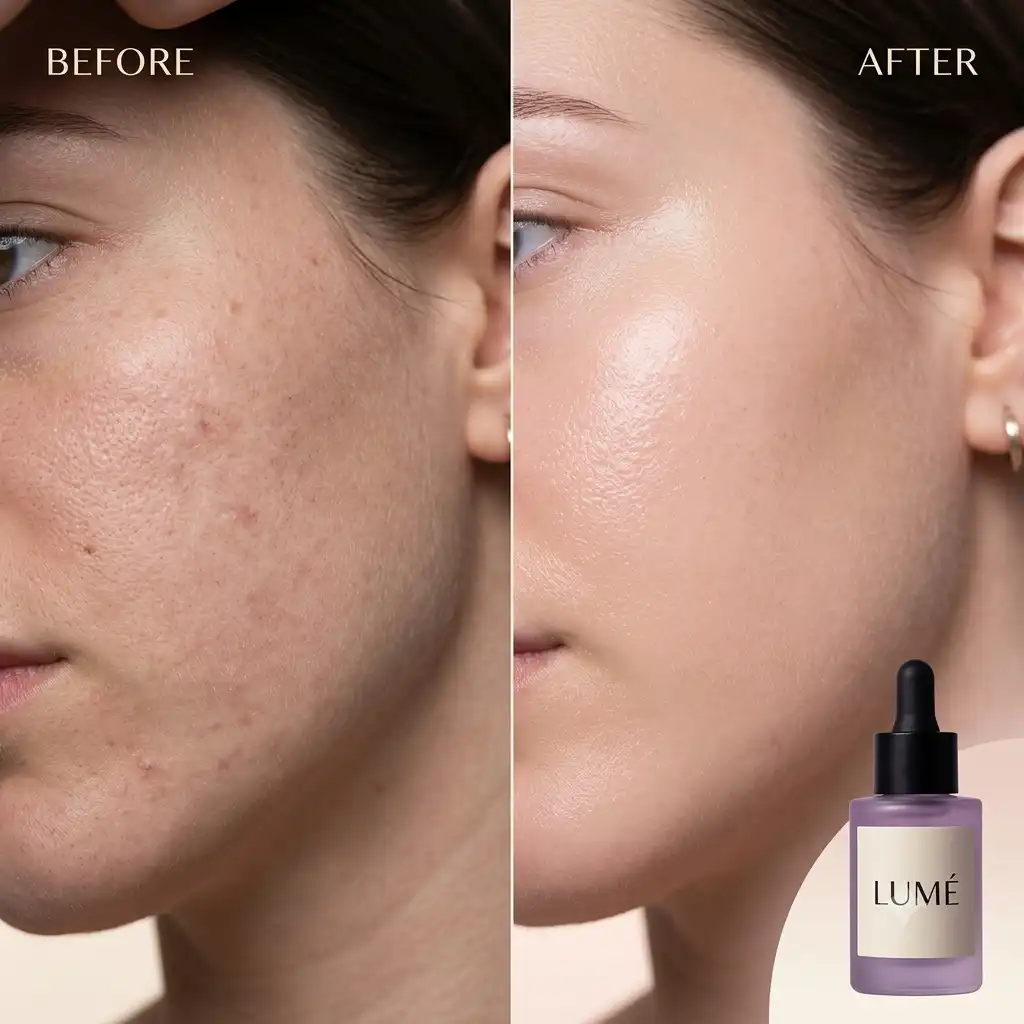
The split delivers the proof your “clinically proven” copy claims — image and words finally agree
The BEFORE / AFTER labels carry the story in under a second, without relying on the caption
Contrast between the two halves survives at thumbnail size, where most of this audience sees it
The transformation is dramatic enough to read as retouched — cold traffic discounts results that look too perfect
No timeframe anywhere in the frame, so “how long?” goes unanswered at peak interest
Meta reviews before/after case by case, not a blanket ban — but a transformation this dramatic, tied to a health claim with no timeframe, is a high-risk pattern regardless of how it scores here
Add a timeframe badge (e.g. “14 days”) and tone down the contrast between the two halves — it lowers the rejection risk if you still want to run this for paid
Save this creative for email, your landing page, or organic posts, where the risk doesn't apply
For paid, lead with the flat lay instead — it's your highest-scoring creative without the before/after risk
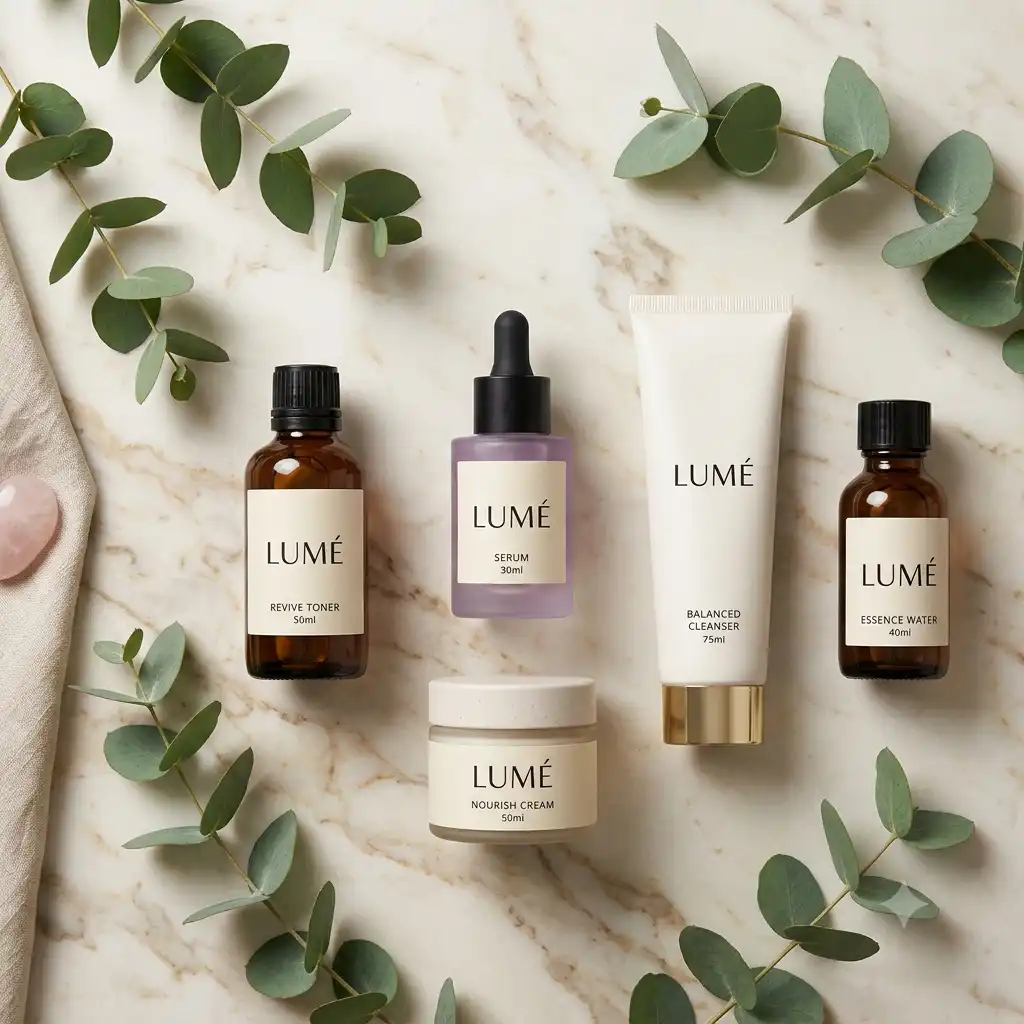
Showing the full range implies a routine rather than a one-off purchase
Labels are clean and on-brand — LUMÉ is legible on every product
Your copy sells one serum, but the creative shows five products — the hero isn’t identifiable
Five competing objects give the eye no landing point, which is what costs it scroll-stop against the before/after
Nothing here shows a result, so “clinically proven” goes unproven
Lead with the serum alone and let the rest of the range play a supporting role
If the range stays, scale the serum up so the hero product is unmistakable
Beautifully styled — it reads as editorial content rather than as an ad
The products sit at roughly 8% of the frame: the room is the subject, not the serum
LUMÉ is illegible at feed size, so every paid impression builds no brand recall
The mirror, plant and towel all compete with the product for attention
Budget-Conscious Parents scored this lowest — it sells an aspirational bathroom, which reads as expensive
Crop tight on the vanity so the products own at least a third of the frame
Or overlay the product in a corner, the way your before/after creative already does
high priorityCreative
Don't run the before/after split as your primary — Meta reviews it case by case, and a dramatic health & beauty transformation like this is a common rejection pattern. Lead with the flat lay instead.
Why: The before/after scores highest at 84, but it's high risk under Meta's before/after review — an unrealistic-looking transformation tied to a health claim, with no disclaimer, is the exact combination reviewers flag. The flat lay is your highest-scoring creative without that risk, at 61 against the lifestyle shot’s 38.
Impact: Keeps the ad launchable — a high-risk top creative that gets rejected delivers none of its 84, not the score itself.
A great score still needs Meta's sign-off
Meta Policy Compliance
Checked against Meta's ad policies before you spend a dollar
High risk
The before/after creative carries high compliance risk — swap it before this ad goes to review. The health claim needs documentation too.
Health & beauty claims
“Clinically proven” needs documentation on file — Meta can reject the ad or pause it mid-flight without it.
Before / after imagery
Meta doesn't blanket-ban before/after — it's reviewed case by case. But a dramatic, health-adjacent transformation like this, with no timeframe or disclaimer, sits squarely in what gets flagged for personal-attribute and misleading-claim violations. High risk of rejection; safer to swap before submitting.
Personal attributes
Copy never implies Meta knows the viewer's skin condition, age, or appearance.
Restricted content
No adult content, restricted products, or misleading pricing detected.
Targeting
Interest-based targeting only — no exclusions on protected classes.
Feed in your headlines, descriptions, CTAs, and creatives. FirstReaction tests every possible combination against your audience and ranks the top performers — in a single pass.
This combination is the strongest performer because it pairs a specific, time-bound transformation promise with visual proof. The before/after creative literally shows the headline's claim in action. For a warm audience, this reinforces what they've already heard about the brand with undeniable evidence. The risk-free CTA eliminates the last barrier to conversion.
Strengths
Perfect copy-creative synergy — visual proves the 14-day claim
Money-back guarantee removes all purchase anxiety
Specific timeframe sets realistic expectations and builds trust
Weaknesses
Before/after visuals can feel gimmicky if lighting differs between shots
No mention of specific ingredients — misses the 'science-backed' angle
Best Suited For
warm
Visual proof reinforces what they've already heard — pushes them from consideration to conversion
cold
Transformation results educate unaware audiences on what's possible with this product
Segment Analysis
Urban Millennials (25-34)
Excellent — this segment loves transformation content and before/after visuals perform exceptionally in their social feeds. The '14 days' speed claim resonates with their desire for fast results.
Budget-Conscious Parents (30-45)
Strong — the money-back guarantee directly addresses their risk aversion. They need to feel confident a skincare product won't be wasted money, and this copy delivers that reassurance.
Suggested Tweak
Add social proof to the description ('Join 50K+ who saw results in 14 days') to compound the transformation claim with crowd validation
Scores
Engagement
94
Action Likelihood
91
Scroll-Stop
92
Glow in 14 Days — Guaranteed
See visible results or your money back — zero risk, zero irritation
Try It Risk-Free
Analysis
Emotionally resonant headline paired with a credibility-driven description creates a powerful trust-building combination. 'No fillers, no fakes' directly challenges competitors and positions the brand as transparent. The flat lay creative showcases the full skincare range professionally, reinforcing the 'better' promise with visual proof of a complete routine.
Strengths
Emotional hook creates instant personal connection to skincare frustration
Anti-competitor positioning ('no fillers, no fakes') builds differentiation
Flat lay shows full product range — implies a complete skincare solution
Weaknesses
No specific results claim or timeframe
May feel too premium for budget-conscious segments
Lacks urgency — no reason to act now vs. later
Best Suited For
warm
Deepens trust for brand-aware users who are comparing options
cold
Clinical proof and 'no fakes' claim cuts through skepticism for first-time viewers
Segment Analysis
Urban Millennials (25-34)
Strong fit — this segment values authenticity and clean beauty claims. 'No fillers, no fakes' resonates with their ingredient-conscious shopping habits.
Budget-Conscious Parents (30-45)
Moderate — they appreciate proven products but the lack of pricing or savings info may not motivate a click from this value-driven segment.
Suggested Tweak
Add a specific stat ('89% saw smoother skin in 2 weeks') to back up 'clinically proven' with hard evidence
Scores
Engagement
90
Action Likelihood
86
Scroll-Stop
88
Your Skin Deserves Better
Clinically proven ingredients that actually work — no fillers, no fakes
Shop Now
Analysis
Authority-led headline with ingredient-specific description appeals to educated skincare consumers who research before buying. The morning routine lifestyle creative grounds the science in an everyday, relatable context. This combination educates without overwhelming — perfect for cold audiences entering the skincare funnel.
Strengths
Dermatologist endorsement carries strong authority in skincare
Named ingredients (niacinamide, HA, vitamin C) signal transparency and expertise
Lifestyle creative makes clinical messaging feel approachable
Weaknesses
'Learn More' CTA is weaker for direct conversions
Ingredient-heavy copy may overwhelm casual browsers
No emotional hook — purely rational appeal
Best Suited For
cold
Authority + ingredients educate research-mode audiences discovering the brand
warm
Scientific backing validates what consideration-stage users need to justify purchase
Segment Analysis
Urban Millennials (25-34)
Strong — this segment actively researches ingredients and trusts dermatologist-backed brands. The named actives (niacinamide, vitamin C) are trending ingredients they already know and seek out.
Budget-Conscious Parents (30-45)
Good — dermatologist recommendation gives them confidence the product is worth the investment. The science-backed angle helps justify spending on skincare.
Suggested Tweak
Switch CTA to 'Try It Risk-Free' to convert the interest generated by the authority messaging into action
Scores
Engagement
87
Action Likelihood
84
Scroll-Stop
83
Dermatologist-Recommended Formula
Powered by niacinamide, hyaluronic acid & vitamin C — backed by science
Real results from marketers who stopped guessing and started simulating.
“We used to launch six creatives and wait a week for Meta to pick one. Now we simulate ten and launch the top three. It hasn't replaced live testing, we just burn less on obvious losers.”
Growth LeadDTC apparel
“I had a carousel ready for a skincare client. It flagged copy that landed with 25-34 but read young to the women 35-50 we were targeting. I rewrote two cards, and that ad set had the account's best CPA that month.”
Freelance Meta Ads Consultant
“The reasoning per segment is what I use most. When a client pushes for their favourite creative, I can show why it's likely to miss their audience instead of just saying 'trust me'.”
Agency owner
“It flagged personal-attribute language I'd written without thinking. Meta would have rejected the ad and I'd have lost two days. Small thing, but it's happened to me before.”
FounderSupplements
“I don't have a media buyer, so everything goes through here before a $300 test. Twice it told me my hook was buried under the product shot, and it was right both times.”
Solo founderHome goods
“We used to launch six creatives and wait a week for Meta to pick one. Now we simulate ten and launch the top three. It hasn't replaced live testing, we just burn less on obvious losers.”
Growth LeadDTC apparel
“I had a carousel ready for a skincare client. It flagged copy that landed with 25-34 but read young to the women 35-50 we were targeting. I rewrote two cards, and that ad set had the account's best CPA that month.”
Freelance Meta Ads Consultant
“The reasoning per segment is what I use most. When a client pushes for their favourite creative, I can show why it's likely to miss their audience instead of just saying 'trust me'.”
Agency owner
“It flagged personal-attribute language I'd written without thinking. Meta would have rejected the ad and I'd have lost two days. Small thing, but it's happened to me before.”
FounderSupplements
“I don't have a media buyer, so everything goes through here before a $300 test. Twice it told me my hook was buried under the product shot, and it was right both times.”
FirstReaction is an AI ad-testing tool that shows you how your target audience will react to an ad before you spend money running it. Each simulation returns a predicted click-through rate (alpha), engagement and sentiment scores, a ranking of your creatives, and the specific fixes that would make the ad stronger.
How does FirstReaction simulate an audience?
You describe who you're targeting, and FirstReaction turns that into 1 to 5 detailed audience segments (you choose how many), each with their own interests, pain points and buying motivations. Add your headline, body copy, call to action and creatives, and the AI plays each persona reacting to your ad, then scores what landed and what didn't.
How accurate are the predictions?
FirstReaction gives you a directional read, not a promise of live results. It's built to catch weak ads, mismatched messages and the wrong creative before you spend, so fewer losers make it to launch. Predicted click-through rate is in alpha. Use simulations to decide what's worth testing live, then let real campaign data have the final word.
Which ad platforms does FirstReaction support?
FirstReaction simulates ads for Facebook and Instagram. You can also pull a live competitor ad straight from the Meta Ad Library and see how your own audience would react to it.
Can I test multiple ad variations at once?
Yes. Add several headlines, descriptions, calls to action and creatives, and FirstReaction's bulk simulation tests every combination in one pass, then ranks them from strongest to weakest. To compare whole concepts instead, run 2 to 5 campaigns side by side against the same audience and see which one wins.
Does FirstReaction work with video ads?
Yes. Upload images, videos or both. FirstReaction ranks every creative in the campaign and tells you what each one does well, where it falls short, and what to change.
Who is FirstReaction for?
FirstReaction is for performance marketers, founders and agencies who run paid social ads and can't afford to learn by burning budget. Solo marketers use it to sanity-check an ad before it goes live. Agencies use it to pick the strongest creative and back their recommendation to clients.
Is my ad and campaign data private?
Yes. Your campaigns, creatives and results stay private to your account, and they're never used to train AI models. FirstReaction doesn't sell or rent your data. You can request deletion of your account and data at any time, and nobody else sees a simulation unless you create a share link for it.
How long does a simulation take?
Usually about a minute for an image ad. Ads with video take a little longer the first time, because the AI watches each video once and remembers what's in it. Running the same video again is quicker.
What is Model an Ad?
Model an Ad creates new ad images for your products, modelled on an ad you like. It reads the reference ad's layout and style, writes copy from your Product Kit's real claims, and renders the image in your brand style. You can refine it in plain words, mark areas to change, resize it for other placements, and make 2K or 4K versions for download.
Can I test a competitor's ad?
Yes. Paste a link from the Meta Ad Library and FirstReaction pulls the ad in, images, video and copy included. You can then simulate it against your own audience, and its images and video are saved to your gallery.
Can I use FirstReaction for my clients?
Yes. Each client can be its own brand with its own audiences, campaigns and assets, and you can send any result as a view-only share link. Agencies with a larger team can talk to us about a custom plan with team workspaces.
How does pricing work?
Every AI feature is paid from one credit balance, so you spend it on what you use most — simulations, bulk tests, AI images, ad clones or audiences. One credit is roughly one ad test. There's a free plan with credits to try everything and no card needed; paid plans add credits every month, and you can top up at any time. Failed runs never use credits, and every button shows its price before you click.
Does FirstReaction replace A/B testing?
No, it makes A/B testing cheaper. Instead of paying to test ten variations live, simulate them with FirstReaction first and only spend on the few worth running. You get a directional answer in minutes, not days of waiting for a live test to reach significance.
Can FirstReaction check my ad against Meta's ad policies?
Yes. FirstReaction runs an advisory check against Meta's ad policies and flags prohibited content, personal-attribute language and misleading claims before you submit, so you're less likely to have an ad rejected.
Know which ad will work. Before you spend.
Join marketers who simulate before they spend. Your first ad tests are free — no credit card required.